Time travel 
close


Time travel has always been one of humanity’s wildest dreams. The idea that we could step outside the limits of now and walk through history like a hallway. It’s not just science fiction; it’s a reflection of our obsession with regret and curiosity. We imagine going back to fix mistakes, or forward to see what becomes of us. From ancient myths about prophets glimpsing the future to modern physics theories about wormholes, time travel has always symbolized freedom. It’s the ultimate escape from “what is” into “what could have been.”
In literature, time travel became a tool to question morality and fate. H.G. Wells’ “The Time Machine” didn’t just explore science it asked what happens when humanity plays god. Later, stories like “Back to the Future” made it fun, showing how one small change in the past could rewrite an entire life. These tales remind us that time isn’t just numbers on a clock; it’s fragile and full of consequences. Every traveler through time ends up learning more about themselves than the universe.
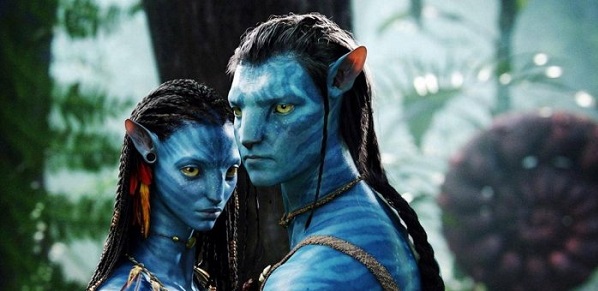
Movies took the concept further, turning time travel into emotion and chaos. “Interstellar” made it heartbreakingly real, where time moved differently for love and science. “Tenet” twisted it into a mind-bending puzzle where the future and past collapse into each other. What fascinates audiences isn’t the machines or theories it’s the idea of control. Time travel lets us imagine that maybe, just maybe, we’re not prisoners of our past. It’s a fantasy about getting a second chance.
Scientists, on the other hand, see time travel less as fiction and more as an equation waiting for proof. Einstein’s theory of relativity already shows how time bends with speed and gravity. Black holes, wormholes, and light-speed travel aren’t just poetic ideas—they’re blueprints. Yet, every time science inches closer, new paradoxes appear. If you go back and change the past, do you erase yourself? Or does the universe find a way to balance the equation? Time travel is both logic and mystery fighting for space.
But beyond science, time travel is deeply human. Every time we reminisce about childhood or imagine our future, we’re traveling mentally, emotionally, spiritually. Music, old photos, even smells can pull us through time faster than any machine. When you walk through your old neighborhood and feel memories come alive, that’s your own kind of time travel. It’s proof that the human mind bends time better than physics ever could.
Maybe that’s why the idea never dies. Time travel isn’t about gadgets or paradoxes it’s about longing. We all want to revisit moments we lost or peek into the ones we hope for. It’s not about changing the timel .


11-12-2025  Science & Technology
11-12-2025  Politics
11-12-2025  Education affairs
11-12-2025  literature & arts
20-03-2023  movies & theatre 8121
23-06-2023  Sports 4013
17-09-2022  movies & theatre 2593
...
tips from the head of dmc channels group- mr.hesham soliman02-08-2023
video  3291...
Exclusive Interview with the Prominent Host (Eman Ezz Eldin) for EMccu today27-10-2022
video  1064...
Culture of Photos Event Guests` Interviews (Pt.2)01-04-2023
video  1045...
Culture of Photos Event Guests` Interviews (Pt. 1)01-04-2023
video  927...
27-10-2022
video  3692