History of FIFA World Cup 
close


The Genesis of a Global Vision (Pre-1930)
The concept of a truly global football tournament was pioneered by Jules Rimet, the French President of FIFA, who sought to create a competition separate from the Olympic Games. After years of lobbying, FIFA approved the idea in 1928. To celebrate the centenary of its independence and given its status as a leading football nation, Uruguay was chosen to host the inaugural tournament. The first official World Cup was held in 1930, featuring 13 participating nations, with the host nation, Uruguay, ultimately defeating Argentina in the final.
The Early Years and Wartime Interruption (1934 –
1950)
Following the debut, the tournament moved to Europe, with Italy winning on home soil in 1934 and successfully defending their title in France in 1938. However, the burgeoning tradition was abruptly halted by World War II. The planned 1942 and 1946 tournaments were canceled, leading to a 12-year gap in the competition`s history. When the tournament resumed in 1950 in Brazil, it delivered one of its biggest upsets: the "Maracanazo," where Uruguay defeated the highly favored host nation in the decisive final match.
The Rise of Global Superstars (1954 – 1970)
The post-war era saw the emergence of football as a true global spectacle. West Germany claimed their first title in 1954, but this period is best defined by the dominance of Brazil and the birth of the legend, Pelé. Brazil secured its first three titles (1958, 1962, and 1970) during this time. Following their third win in 1970, Brazil was allowed to keep the original trophy, the Jules Rimet Cup, permanently, necessitating the design of a new prize for future winners.
The Birth of the Modern Trophy (1974 – 1986)
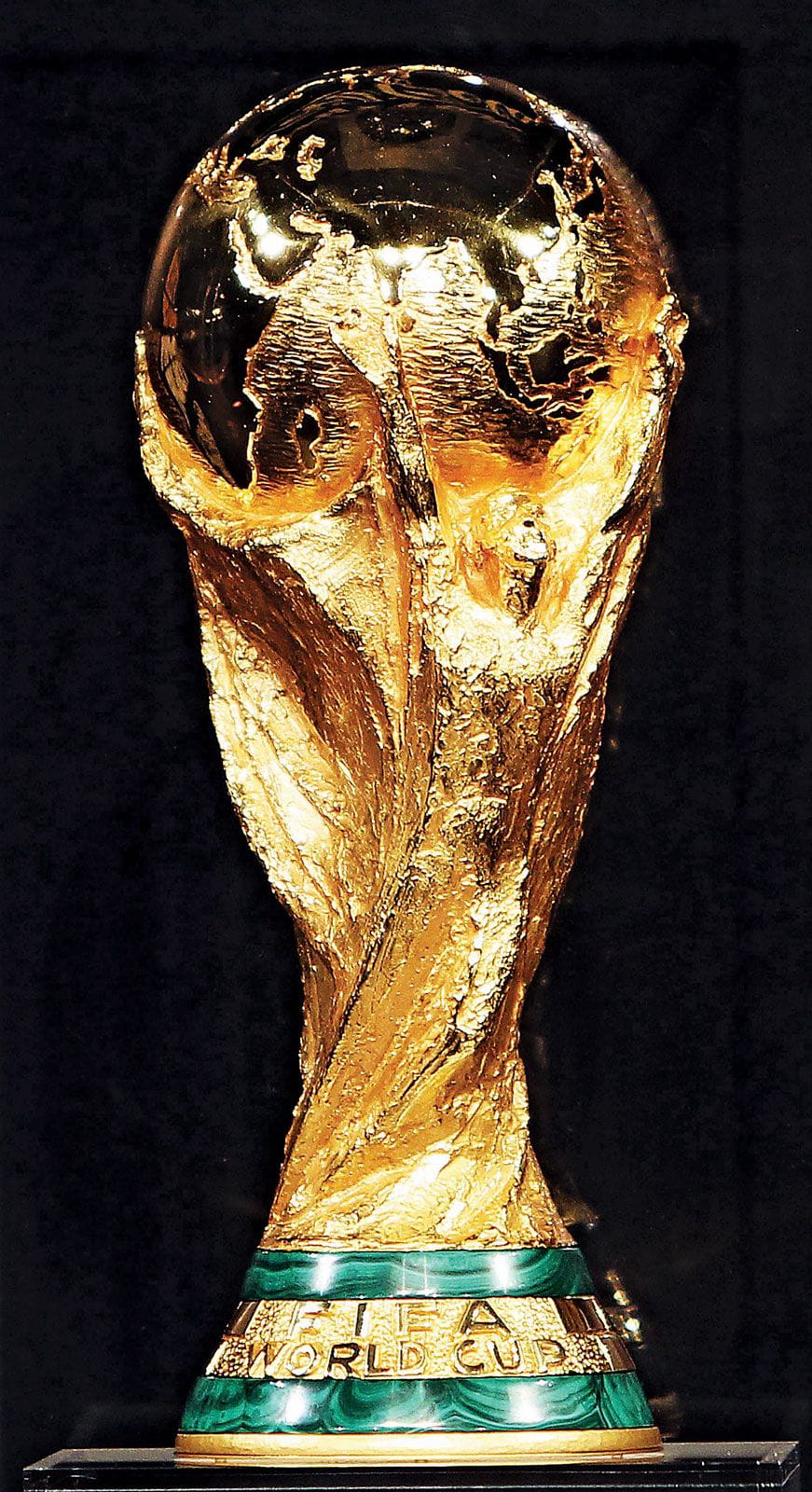
The tournament of 1974, hosted by West Germany, marked the debut of the current, instantly recognizable FIFA World Cup Trophy. The 1970s and 1980s also brought significant format changes to accommodate
more nations. In 1982, the number of participating teams expandedfrom16to24, reflecting the globalization of the sport. This era produced legendary moments, most notably the 1986 tournament in Mexico, which was completely dominated by the brilliance of Diego Maradona as Argentina won its second title.
The Era of 32 Teams (1998 – 2022)
By 1998, the tournament settled into the widely recognized format of 32 teams, a structure that lasted for seven editions. This expansion provided opportunities for new continents to host and shine. The event was co-hosted for the first time by two Asian nations, South Korea and Japan, in 2002, and saw the first tournament on African soil in South Africa in 2010. This period saw major European and South American powers solidify their dominance, with France, Italy, Spain, and Germany adding to the trophy cabinet.
Breaking New Ground in the Middle East (2022)
The final chapter of the 32-team era was wr .


20-12-2025  literature & arts
20-12-2025  health
20-12-2025  Women& men
20-03-2023  movies & theatre 8137
23-06-2023  Sports 4036
17-09-2022  movies & theatre 2611
...
tips from the head of dmc channels group- mr.hesham soliman02-08-2023
video  3304...
Exclusive Interview with the Prominent Host (Eman Ezz Eldin) for EMccu today27-10-2022
video  1085...
Culture of Photos Event Guests` Interviews (Pt.2)01-04-2023
video  1057...
Culture of Photos Event Guests` Interviews (Pt. 1)01-04-2023
video  935...
27-10-2022
video  3712