Forensic Dissection of Lost Decade in Egyptian Youth Football 
close


By Kareem Mostafa
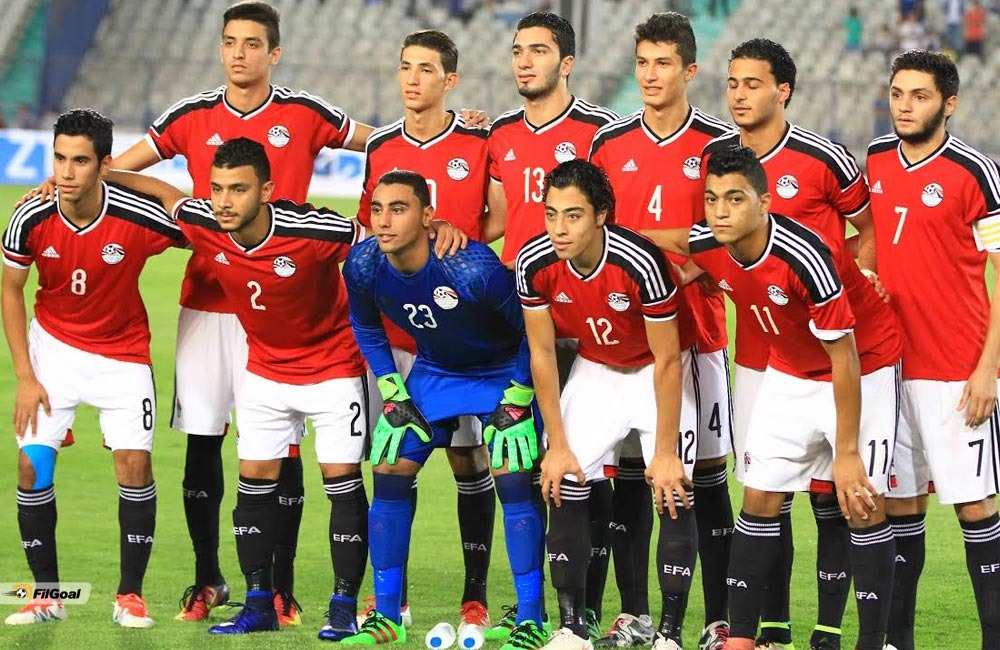
In the world of football—where dreams rise and crumble on the whistle of a referee or a wayward strike—some statements transcend casual commentary to become verdicts that define an era. Among these comes the now-infamous claim “Egypt has no talents,” first voiced by coach Shawky Gharib in 2015 and later echoed by others, including Osama Nabih. What started as an opinion slowly evolved into a convenient narrative shield: a ready-made excuse for ten consecutive years of failure for Egypt’s U-20 national team.
This report poses a central question: Is Egypt genuinely suffering from a drought of football talent, or has this phrase become a rhetorical cover protecting a system that repeatedly fails to nurture and reap the country’s potential? The investigation goes far beyond recounting defeats—it unpacks the structural causes behind a systematic decline: unstable technical leadership, fragile youth infrastructure, and a federation that consistently reacts too late.
At the outset, it is necessary to correct a common misconception referenced in the original inquiry regarding Egypt’s “latest failure at the U-20 World Cup in Argentina.” The more painful truth is this: Egypt did not fail in the World Cup; it failed to qualify in the first place.
The disastrous early exit from the 2023 Africa U-20 Cup of Nations—hosted on Egyptian soil—was the breaking point. It stripped the system of all excuses and exposed the depth of the crisis.
A Torn Legacy – A Chronicle of Disappointment
To understand the depth of today’s collapse, one must revisit a recent past when Egypt’s youth teams were continental and global contenders. Qualifying for the U-20 World Cup was not a dream; it was an expectation.
Fans still remember the historic 2001 World Cup in Argentina, where Shawky Gharib guided a golden generation—including Mohamed Yasser El-Yamani, Wael Reyad, and Hosni Abd Rabo—to a bronze medal, a feat never repeated. Equally unforgettable was Egypt’s 2013 Africa U-20 title under Rabie Yassin, the nation’s last major youth triumph.
These were not coincidences, but outcomes of a system capable of developing players ready for elite competition.
A Decade of Decline (2015–2025)
2015 – The First Warning Signs
Egypt’s downturn began around 2015. Although details of the Senegal tournament are scarce, the infamous “no talents” comment originated in this context—an early warning of what was to follow.
.
2017–2021 – The Lost Generations
During this period, the youth team failed to qualify for two consecutive Africa U-20 tournaments (2019, 2021).
This automatically meant missing two World Cups—effectively erasing the international exposure of two entire generations.
2023 – The Home-Soil Catastrophe
As hosts, Egypt entered the tournament with expectations of redemption.
Instead came humiliation:
· 0–0 vs Mozambique
· 0–1 vs Nigeria
· 0–4 vs Senegal
Zero goals. One point. Bottom of the group—an unprecedented collapse that exposed the structural rot.
2025 – The Illusion of Recovery
After a 12-year absence, Egypt finally returned to the U-20 World Cup under Osama Nabih.
But the comeback dissolved quickly with a 0–2 defeat to Japan, highlighting tactical and organizational gaps that remain as wide as ever.
The findings are stark: failure is no longer an exception—it has become the norm.
Chapter II: The Revolving Door and the Blame Game
If on-field results are the symptoms, then technical instability is a core disease.
The managerial position has become a revolving door—with at least six managers taking charge since 2015:
· Yasser Radwan (2014–15)
· Moetamed Gamal (2016–17)
· Rabie Yassin (2019–20)
· Mahmoud Gaber (2020–23)
· Wael Reyad (2023–24)
· Osama Nabih (2025– )
Each arrives with lofty promises and leaves amid disappointment.
No philosophy survives. No generation completes a coherent cycle.
Short-term sackings may appease fans temporarily, but they sabotage long-term development.
Debunking the Myth: “Egypt Has No Talents”
The excuse collapses under scrutiny.
The European pipeline tells another story. Increasing numbers of Egyptian youths are being scouted by elite clubs:
· Omar Khadr (Aston Villa)
· Salim Talab (Hertha Berlin)
· Tibo Gabriel (Mainz)
· Amr “Bibo” (Aarau)
· Cameron Ismail (Arsenal)
· Karim Ahmed (Liverpool)
Talent exists.
What does not exist is a functioning system to utilize it.
Critics highlight poor tactical identity, questionable player selection, and bias toward big-club players even when underperforming—while standout talents in clubs like Al-Ittihad Alexandria (national youth champions) are largely ignored.
Furthermore, the repeated claim of “no talents” reveals a deeper issue: the outdated coaching culture itself.
Coaches incapable of modern player development are diagnosing the problem incorrectly—because they are part of it.
Chapter III: The Cracked Foundation – Inside Egypt’s Talent Pipeline
1. The Official System: A League in Name Only
Egypt’s youth league structure exists—but its effectiveness is widely doubted.
Outdated coaching, excessive physical training, and persistent nepotism plague youth sectors.
Odd decisions, such as mandatory penalty shootouts in drawn matches, place unnecessary pressure on young players without offering real developmental value.
2. The Chaos of Private Academies
With formal clubs failing, a massive boom of private academies emerged—many unlicensed and profit-driven.
Training quality varies wildly.
Most academies offer no pathway to professional clubs.
Recent EFA moves to classify and regulate academies (A/B/C) are positive but years overdue.
The result is a system that produces quantity over quality—hundreds of thousands of young players, but only a handful receiving proper, scientific training.
Even promising initiatives like FIFA’s TDS project and analytics partnerships (e.g., Eyeball with Arab Contractors FC) risk becoming isolated islands of success if not part of a systemic overhaul.
Chapter IV: The African Blueprint – Lessons from the Continent
Two African academies stand as proof that talent is not Egypt’s problem—structure is.
Case Study 1: Right to Dream (Ghana)
A holistic model combining elite football, top-tier education, and clear pathways via the Mansour Group’s global club network (Nordsjælland, San Diego, TUT).
Graduates include Mohammed Kudus and Kamaldeen Sulemana.
Case Study 2: Génération Foot (Senegal)
A strategic partnership with FC Metz providing coaching expertise, financing, and a guaranteed pathway to Europe.
Graduates include Sadio Mané, Ismaïla Sarr, and Pape Cissé.
.
Both models prioritize:
· Education
· Long-term development
· A transparent, merit-based route to professional football
· These are the very components lacking in Egypt’s system.
· Conclusion – Talent Exists. The System Is Broken.
After dissecting a decade of decay, the findings are undeniable:
Egypt’s youth football crisis is not a crisis of talent, but a crisis of system, governance, and vision.
The narrative “Egypt has no talents” is a symptom—not a diagnosis.
The country’s failures stem from:
· catastrophic tournament results
· chronic coaching instability
· a toxic culture of blame
· a fractured talent pipeline
· reactionary governance by the EFA
Meanwhile, Ghana and Senegal demonstrate what is possible when method, strategy, and long-term planning intersect.
If the status quo continues, Egypt’s decline will only accelerate.
But hope remains: Egypt’s young talents are an untapped national resource—rich, abundant, and waiting for a system worthy of them.
Transforming that potential into reality demands nothing less than a radical, structural overhaul.
.


11-12-2025  Science & Technology
11-12-2025  Politics
11-12-2025  Education affairs
11-12-2025  literature & arts
20-03-2023  movies & theatre 8125
23-06-2023  Sports 4014
17-09-2022  movies & theatre 2594
...
tips from the head of dmc channels group- mr.hesham soliman02-08-2023
video  3291...
Exclusive Interview with the Prominent Host (Eman Ezz Eldin) for EMccu today27-10-2022
video  1065...
Culture of Photos Event Guests` Interviews (Pt.2)01-04-2023
video  1045...
Culture of Photos Event Guests` Interviews (Pt. 1)01-04-2023
video  927...
27-10-2022
video  3693