Emccu today

Cairo University`s Faculty of Mass Communication Organizes "EGICA 3" International Forum to Discuss Representations of Women, Children, and People with Disabilities in Arab Media 
sara sherif  (6)

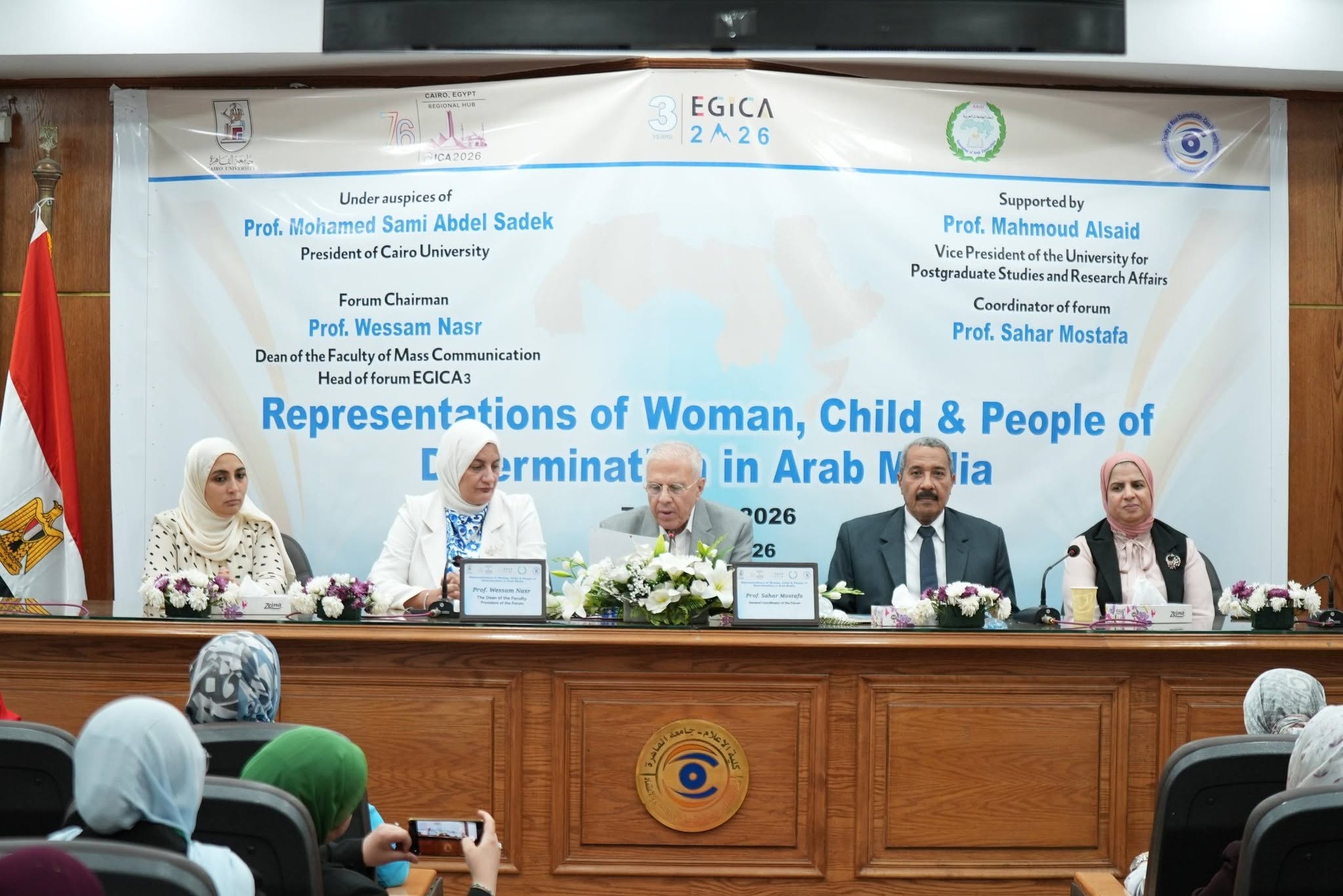
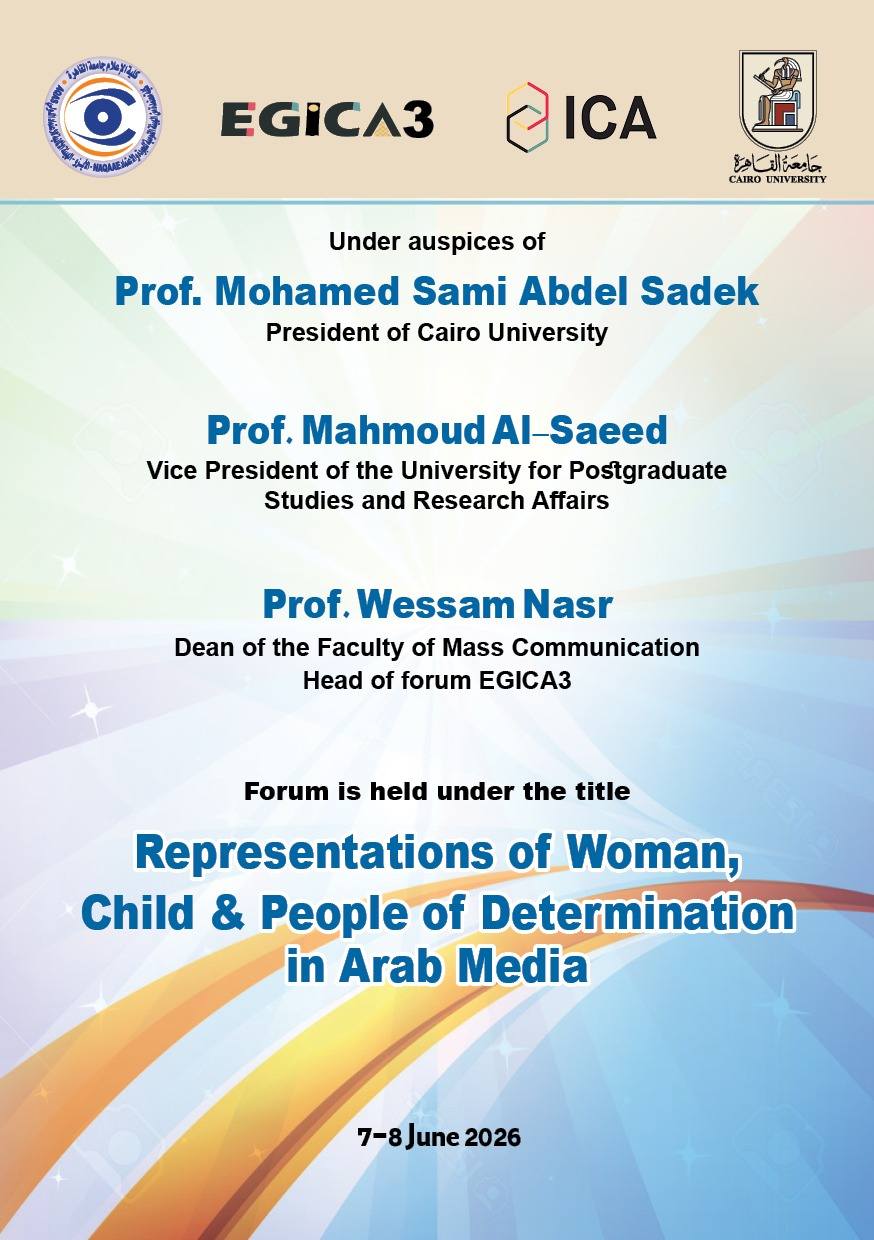
     The Faculty of Mass Communication at Cairo University is organizing the third edition of its International Scientific Forum, "EGICA 3," on June 7-8. The prestigious event is held under the patronage of Prof. Dr. Mohamed Sami Abdel Sadek, President of Cairo University, and under the supervision of Prof. Dr. Mahmoud El-Said, Vice President for Postgraduate Studies and Research. The forum is chaired by Prof. Dr. Wesam Nasr, Dean of the Faculty of Mass Communication, and is centrally coordinated by Prof. Dr. Sahar Mostafa.


    The choice of this year’s theme, "Representations of Women, Children, and People with Disabilities in Arab Media," aligns directly with the central theme of the International Communication Association`s global conference, "ICA 2026," which focuses on communication and inequality in context. It explores how structural divisions and human experiences are shaped across diverse social and geographical settings, while highlighting the unequal distribution of digital and political resources that fuel contemporary crises like algorithmic discrimination and media disinformation. Through this conceptual framework, the EGICA 3 forum seeks to deconstruct the communicative frameworks that shape collective awareness regarding these three groups, while evaluating the ability of Arab media systems to transcend historical marginalization and provide fair, inclusive representation that ensures empowerment and integration.


    The forum features an intensive scientific agenda designed to provide a comprehensive analysis of current issues facing these vulnerable groups through four detailed research tracks and three major panel discussions. The first track, dedicated to the representations of women, stems from a critical vision to evaluate the positioning of women in the media landscape. This includes analyzing the image of women in Arab drama and cinema from modern semiotic and critical perspectives, monitoring media coverage of violence against women in digital press and social media platforms, and discussing the role of media in enhancing women`s political and economic empowerment while dissecting the gap between attempts at physical objectification and efforts to highlight inspiring role models.


    In the same context, the second track focuses on the issues of children and media in the digital age. It discusses the fast-paced challenges facing Arab children in digital environments, highlighting the ethics of media coverage, privacy, dignity, and digital rights. Additionally, it offers an in-depth study on the rise of "child influencers" and their direct impact on identity and values within Arab societies. Participants will also examine representations of children in Arab entertainment and animation to analyze the struggle of local content against imported media, while reviewing practical mechanisms to combat cyberbullying and counter the various risks of the digital space.


    .

    The third track centers on people with disabilities from a developmental media perspective. It analyzes media discourse around disability to track the shift from a traditional "charitable model" to a contemporary "rights-based model." This track also evaluates the digital accessibility of Arab media platforms to measure their inclusivity for users with disabilities and their ability to access content, complemented by a comparative study of the representation of people with disabilities in Arab drama between current reality and future aspirations, while highlighting the use of alternative media to create free interactive spaces for self-expression.


    The research tracks conclude by discussing technological and legislative intersections to answer a pivotal question regarding how modern technologies affect vulnerable groups. This track reviews media policies and codes of honor to evaluate the Arab regulatory frameworks governing content related to women, children, and people with disabilities. Academics in this session aim to bridge interdisciplinary gaps by advocating for the construction of "non-Western" theoretical frameworks tailored to the specificities of studying marginalized groups in the Arab region, alongside showcasing case studies of Arab media institutions to evaluate best practices in producing inclusive content.


    .

    Alongside the extensive research sessions, the forum hosts three major panel discussions to provide complementary strategic visions. The first panel focuses on Arab media policies and the shift toward a model of rights and full inclusion to link media outcomes with contemporary legislation. The second panel discusses media representations between stereotyping and empowerment, aiming to produce practical recommendations for a fairer and more inclusive Arab discourse. Finally, the third panel highlights the algorithms of exclusion and empowerment to dissect the challenges of artificial intelligence and the future representation of different societal groups in the vast digital space. The forum also dedicates a significant space for research posters as an engaging visual medium to summarize studies and stimulate scientific debate, strictly adhering to the International Communication Association (ICA) guidelines and global standards derived from the research manuals of New York University and the University of Reading.

    .

  write acomment


  Comments

Related Posts you may like

short list