Who’s to blame? 
close


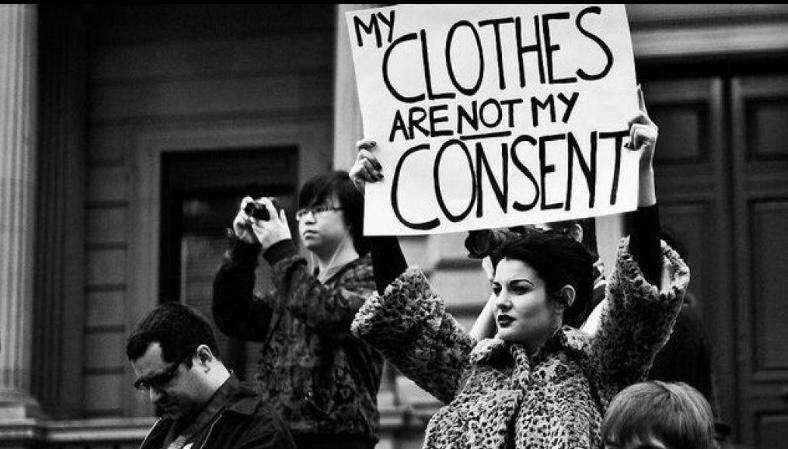
How many times have we heard the sentence “well look at what she was wearing”? When a woman says she has been harassed you will often hear people ask the same question, to every woman doesn’t matter what age what country what culture there’s always a question. This shows how there is an underlying issue here. Women around the world including Egypt are still blamed for what they are wearing. This shouldn’t be the case because it’s never that simple, harassment isn’t caused by what a woman wears.
Women of all different looks and styles can be harassed. Some women wear short and tight clothes. Others wear loose clothes covering most of their body. Some wear the hijab and some wear the niqab. All these women can be harassed by unwanted comments, stalking, touching or intimidation. If women were safe by wearing modest clothes women wearing the hijab and niqab wouldn’t be harassed. However, they are and this should make us question why. Some of the examples can be even worse when thinking about young children. Young children can be harassed and abused. A 6-year-old child would not be wearing clothes to gain attention. There is no logical reason to blame a child for being harassed because of what they are wearing. The person who decides to do something wrong is 100% to blame. Harassment can occur in situations where the person has nothing to do with what they are wearing.
.
Whilst some may argue women should dress modestly to not gain attention and reduce the chance of being harassed. Some may think certain clothes give a message or gain unwanted attention. Others may think women dressing a certain way is a form of protection. I can understand people may have different opinions on what they should wear based on their personal and cultural beliefs, but everyone should have the right to wear what makes them comfortable. Though this is mixing up attraction and permission. Just because someone finds you attractive doesn’t mean they have the right to stalk, touch, insult or make you feel unsafe. It is the person`s responsibility to control their actions. You can advise people to be aware of their surroundings without implying the victim is to blame. By telling women to change their clothes you are placing the blame on the victim and the person responsible may not even be questioned. This gives an unfair message that women need to constantly change their looks to prevent someone from doing something. Why should women have to prove they were wearing modest clothes to be respected?
This issue isn’t just an Egyptian one. In Egyptian society and many other places, the topic of harassment can often turn into a discussion about what the woman was wearing, where she was or why she should’ve acted differently. Victim blaming occurs in many different countries and cultures. Whilst the details may differ the question is often the same. Why did she do that? We should be asking why the harasser thought it was okay. Linking woman’s clothes to harassment is unfair and takes away from the real issue. Clothes don’t make decisions. A short skirt doesn’t give permission and wearing a hijab or niqab doesn’t guarantee protection. Children will never be to blame for what an adult does. Everyone deserves to walk around public without being harassed no matter what they are wearing.
It is necessary to stop looking at the victims’ wardrobes and take responsibility from the harasser. Respect shouldn’t be given based on how long the skirt is, how much skin is being shown or if hair is covered. The Question shouldn’t be “What was she wearing?” But “Why did they think they had the right to harass her?”
.
Hagar Ayman
Sara Mahmoud
Layan Hazem
Adam Ramy
Malak Moataz
18-11-2026  Women& men
18-11-2026  SCU
20-03-2023  movies & theatre 10621
28-11-2022  Sports 7935
17-09-2022  movies & theatre 5152
...
tips from the head of dmc channels group- mr.hesham soliman02-08-2023
video  5702...
Exclusive Interview with the Prominent Host (Eman Ezz Eldin) for EMccu today27-10-2022
video  3531...
Culture of Photos Event Guests` Interviews (Pt.2)01-04-2023
video  3470...
Culture of Photos Event Guests` Interviews (Pt. 1)01-04-2023
video  3295...
27-10-2022
video  6228