Emccu today

latest news bar

The Feed Is the New Front Page 
Dr.hany  (9)

    Who decides what young readers know?
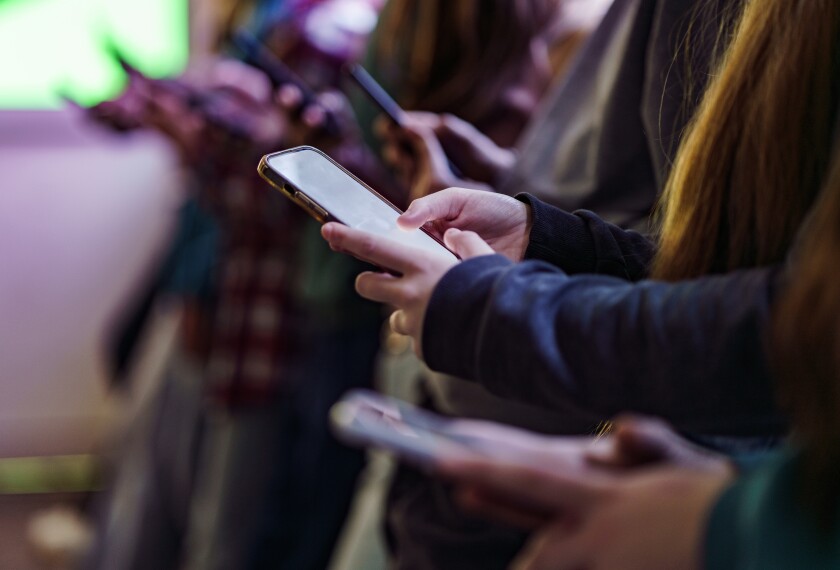
    The front page used to be a place. It was a physical sheet designed by editors, and every story on it was there because someone with experience decided it mattered. For a growing number of people, the front page is now a feed, and what appears in it is chosen by an algorithm that does not care whether a story is important, only whether it will keep someone scrolling. This is no longer a theory. According to the Reuters Institute’s Digital News Report 2026, which surveyed almost 100,000 people in 48 markets, social media and video platforms have become the most widely used source of online news in the world for the first time, ahead of the websites and apps of news organizations themselves.


    It is easy to treat this as progress, and in some ways it is. Platforms are free, fast and already open on every phone. A student who would never buy a newspaper still sees the news, even by accident, between two videos. Short videos can explain a complicated story in a minute, and creators can reach people that traditional outlets failed to reach for years. Anyone arguing that audiences should simply go back to their old habits is ignoring the reasons they left.


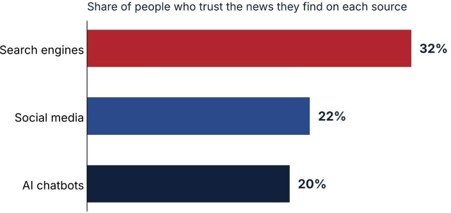
    The problem is what comes with the convenience. The same report describes trust in news as being at its lowest level since tracking began in 2015, at about 37 percent globally. The sources growing fastest are also the ones people trust least. Only 22 percent of respondents said they trust the news they find on social media and 20 percent trust news from AI chatbots, compared with 32 percent for search engines. In other words, audiences are moving toward platforms they do not fully believe, simply because those platforms are the easiest thing to reach.


    AI makes the question sharper. Weekly use of AI chatbots for news has risen from 7% to 10% worldwide, and among 18- to 24-year-olds it reaches 17%. A chatbot has no byline, no editor and no correction policy. It summarizes what others have reported, and when nobody has reported a story, the summary has nothing to stand on. The more people ask a machine for the news, the more they depend on journalists they never see and never credit.

    .

    Supporters of the platform model have a fair point, because audiences are not completely passive. The report found that AI chatbot users are more likely than search or social media users to click through to verify a fact (44%) or check a source (43 %). That


    suggests part of the audience knows about the problem and tries to deal with it. But verification that depends on each reader’s patience cannot replace verification done once, by a professional, before publishing. Checking every headline is a full-time job, and readers already have one.


    This is where newsrooms still matter. Their value was never the paper itself. It is the process behind it: reporters who go to the place, editors who ask where a claim comes from, and a name attached to the story so that someone can be held responsible. Print enforced that process because a printed mistake could not be deleted. Digital publishing removed the physical limit, but nothing says the standard has to disappear with it. A video on TikTok can follow the same rules as a printed column: sourced, checked and corrected in public.


    So, the useful question is not whether newsrooms should be on social media. They already have to be, because that is where the audience is. The question is whether they arrive there as journalism or as content. Outlets that publish short videos with clear sourcing, named reporters and visible corrections give platforms something worth distributing. Outlets that copy the tone of the feed to win views end up proving the audience right to distrust them. For media students in particular, the lesson is practical: writing for the page and writing for the screen are now the same skill, carrying the same responsibility.


    The feed has replaced the front page, but it has not replaced the job the front page did. Somebody still must decide what matters, check that it is true, and put their name on it. If that work fades away because scrolling is easier, the next generation will be well connected and badly informed. Platforms can carry the news, but they cannot make it trustworthy. That part still belongs to journalists.

    .

    Ammar Ashraf Amer 


    Rokia Alaa Abbas 


    Hana Amr Helmy 


    Joumana Mohamed El-Sayed 


    Tasneem Mohamed Afify 

  write acomment


  Comments

Related Posts you may like

short list