Emccu today


Mass Media as a Bridge for Cultures: Cairo Mass Comm Webinar Analyzes Egyptian Ramadan Drama 
sara sherif  (12)

    By: Sara Sherif


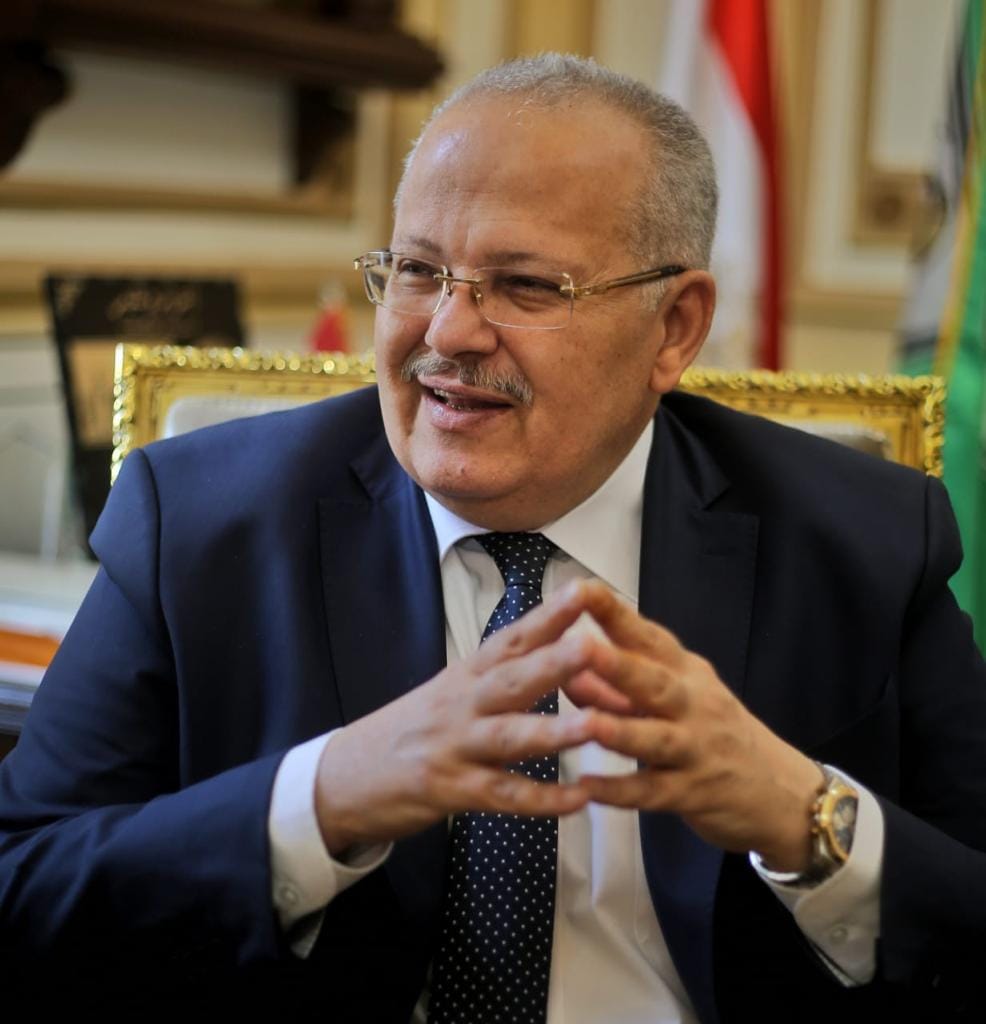
    In line with the commitment of the Faculty of Mass Communication at Cairo University to enhance cultural openness and activate the role of media in building bridges of communication between peoples, and under the auspices of Prof. Mohamed Sami Abdel Sadek, President of Cairo University, and Prof. Wessam Nasr, Dean of the Faculty of Mass Communication, the International Relations Unit (MCIR) at the faculty organized a webinar titled: "Mass Media as a Tool for Building Cultural Bridges and Shaping Mutual Understanding Between Societies: An Analytical Study of Egyptian Ramadan Drama."


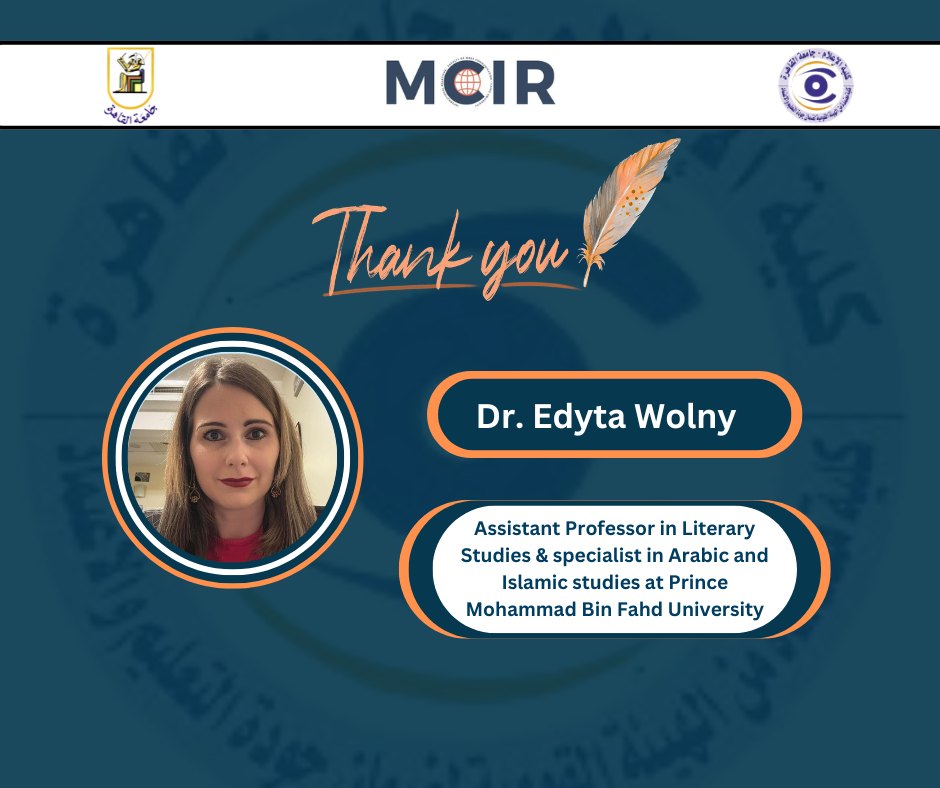
    The webinar was organized and supervised by Dr. Alaa Fawzy Abdel Latif, Director of the Unit, and Ms. Christine Guirguis, Assistant Lecturer and Deputy Director of the Unit. It hosted Dr. Edyta Wolny, Assistant Professor at the College of Sciences and Human Studies at Prince Mohammad bin Fahd University in Saudi Arabia, and a specialist in Arabic and Islamic Studies. Dr. Wolny presented an in-depth analytical vision regarding the role of mass media in narrowing the distance between peoples through series and Ramadan dramas.


    At the beginning of her speech, Dr. Edyta Wolny emphasized that media harnesses its power to achieve noble goals, noting that Arab and Western societies are essentially similar in their core, and that social problems are not exclusive to the Arab region alone.


    Dr. Wolny expressed her deep pride in learning Modern Standard Arabic and, specifically, the Egyptian dialect, which she has studied and continues to teach, noting that she launched a campaign to teach the Egyptian dialect in Poland. She explained that Egyptian series play a pivotal role in teaching this dialect to non-native speakers, which contributes to bringing cultures closer together.


    At the start of the seminar, Wolny confirmed that mass media possesses an influential power in achieving cultural and social goals, noting that Arab and Western societies share many issues, and it is not necessary for problems to be confined to specific societies. She added that language represents an important bridge for cultural rapprochement, expressing her pride in learning Modern Standard Arabic and her happiness in mastering the Egyptian dialect, which she taught and promoted in Poland.


    She explained that her choice to study Egyptian drama came from viewing it as an important entry point for understanding Egyptian culture. She pointed out that the Ramadan season is considered the most significant in the Arab television industry, as it determines production and programming trends throughout the year, and channels witness intense competition during this time to retain audiences and attract new viewers.


    .

    She noted that the nature of Ramadan broadcasting is characterized by the diversity of works across various channels, with series extending to 15 or 30 episodes, alongside the production of multiple seasons for some works and advertisements specifically designed for this season. She also highlighted the development of broadcasting tools, from traditional channels to digital platforms like "Watch It" and "Shahid," emphasizing that the spread of these platforms has become a means of global rapprochement that allows viewers anywhere in the world to follow Egyptian drama.


    She added that Egyptian series play an important role in teaching the colloquial dialect, in addition to their role in raising various societal issues, such as illegal migration, terrorism, addiction, mental illness, autism, violence against women, and family problems. She stressed that drama does not stop at displaying these issues but contributes to raising societal awareness and helping to treat them, especially by presenting mental illness as a natural condition that does not warrant stigma.


    She also noted that Egyptian drama reflects common human issues between peoples, such as bullying and family disputes, thereby enhancing cultural rapprochement.


    Dr. Edyta discussed models of Egyptian series that express social issues. She reviewed a group of Egyptian dramatic works that tackled thorny human and social issues, asserting that "not hiding problems" is the first step toward solving them. She touched upon security and political issues through the series Ard Gaw, which addressed illegal migration, and the series Abu Omar El Masry, which discussed terrorism. She also praised the awareness-raising role of series such as Suqoot Horr and Ala Qad El Hob in dealing with mental illness and emphasizing that a psychiatric patient is a normal person who society should not be ashamed of, also highlighting the series Hala Khassa and El Lon El Azraq for providing a conscious image of autism, in addition to shedding light on the problem of addiction in the series Qamar Hadi.


    In the context of women’s and family issues, she discussed the series Etneen Gherna, which addressed violence against women, praising the positive initiative of displaying the National Council for Women’s hotline during scenes involving violence. She also reviewed the series Ab Walaken and Faten Amal Harbi in presenting problems of divorce, visitation rights, and the impact of family disputes on children, as well as the series Kan Yama Kan, which dealt with the situation of the child after separation, leading to the series El Kabeer Awy as a model for discussing cultural differences, education issues, and bullying, which is a global phenomenon.


    .

    Dr. Edyta Wolny concluded her speech by expressing her hope that Polish television would purchase and broadcast Egyptian series, given the human stories and universal themes they carry that contribute to building mutual understanding, calling for increased promotion of Egyptian dramatic production globally.


    For her part, Dr. Alaa Fawzy emphasized the importance of this scientific approach which highlights the role of Egyptian media in shaping public opinion and building cultural bridges, pointing to the growing role of media in enhancing soft power and building bridges of communication between peoples. The webinar saw interaction from the attendees, where interventions agreed on the importance of Egyptian drama and its role in shaping mutual understanding between societies.


    The seminar concluded by affirming that Egyptian mass media represents an effective tool in bringing viewpoints closer and enhancing cultural dialogue, thereby contributing to supporting human understanding among different peoples.

    .

  write acomment


  Comments

Related Posts you may like

short list